-Analysis-
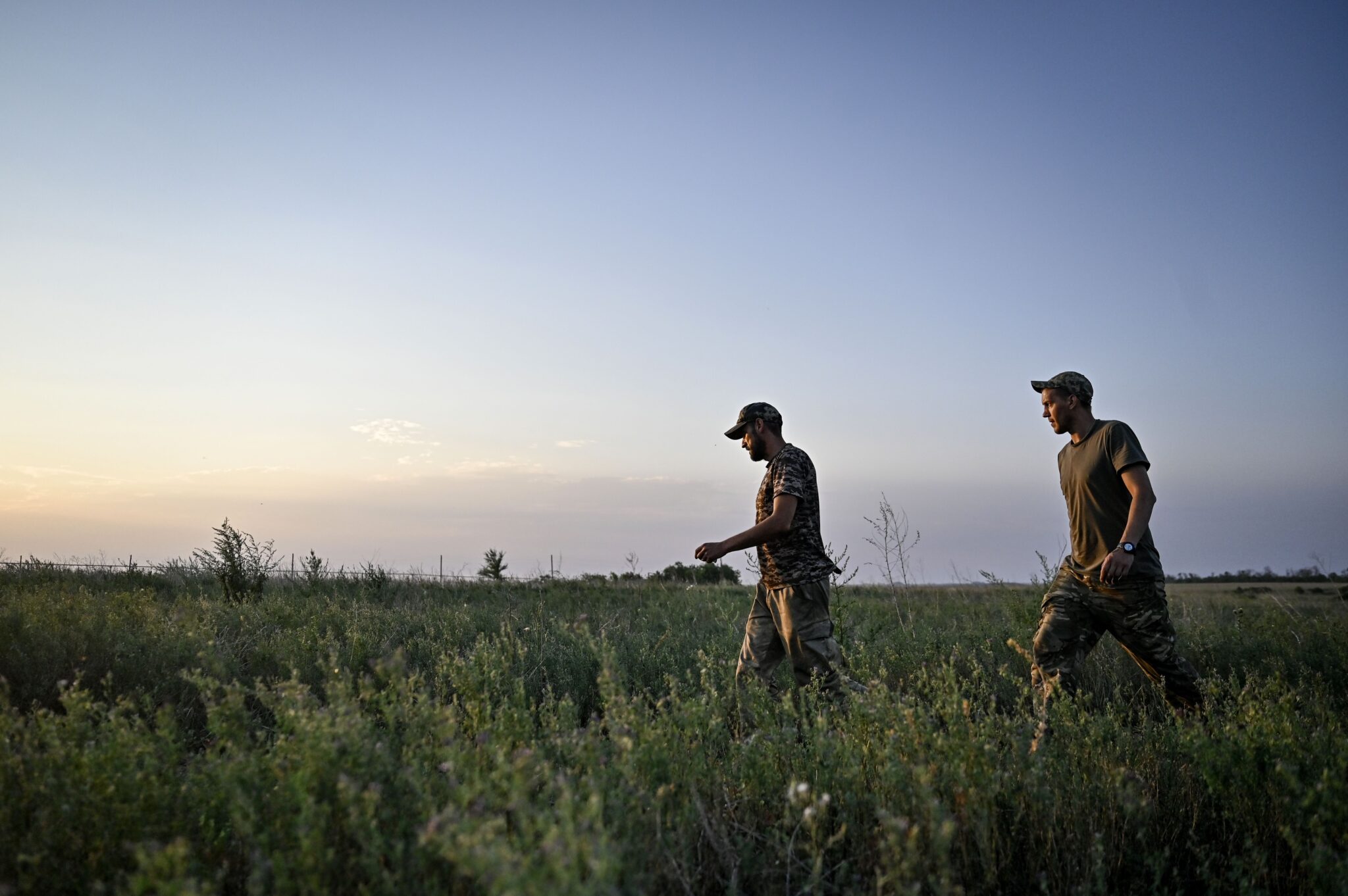
TURIN — The negotiations on Ukraine are no longer focused solely on how to stop the war but on how to keep it from breaking out again. That is why the United States is pushing for solid, not symbolic, security guarantees that could deter Moscow from new incursions. The idea of a Korean-style “buffer zone,” with borders secured by an international military presence, has returned to the heart of talks among U.S. President Donald Trump, Ukrainian President Volodymyr Zelensky and European leaders in Washington, according to EU sources.
For the latest news & views from every corner of the world, Worldcrunch Today is the only truly international newsletter. Sign up here.
This is not just a theoretical scenario, as London and Paris have already expressed willingness to send troops to western Ukraine. But without U.S. backing, direct or indirect, such an arrangement would lack any real credibility.
The underlying issue has not changed. Ukraine is not a NATO member, and therefore cannot rely on the automatic protection guaranteed by Article 5. This has given rise to the idea of a multilateral agreement offering an equivalent level of protection, but with a more flexible structure that is less provocative in the Kremlin’s eyes. Within this framework, Washington’s role would be twofold.
Predictive surveillance
On the military and logistical side, it would supply strategic transport, aircraft ready for takeoff outside Ukrainian territory, and air defense systems that could be used by European allies. On the technological side, it would open access to tools that have already been crucial to Kyiv’s resistance. This is where Palantir comes in.
This American company, led by Alexander Karp and founded by Peter Thiel (who is close to Trump), specializes in data analytics and artificial intelligence. Its systems combine satellite imagery, drone surveillance and intelligence reports to predict enemy movements, streamline supply chains, and coordinate troop deployment in real time. Washington has been using them for some time to aid the Ukrainians, and now they could also be made available to European forces, if the conditions are right.
An armed truce has been in place on the Korean Peninsula for more than 70 years.
In this way, the buffer zone would not only be a militarily guarded space but also an area that is continuously monitored digitally — and even with predictive methods, as Palantir’s software provides the kind of computational analysis that ensures full superiority on the ground.
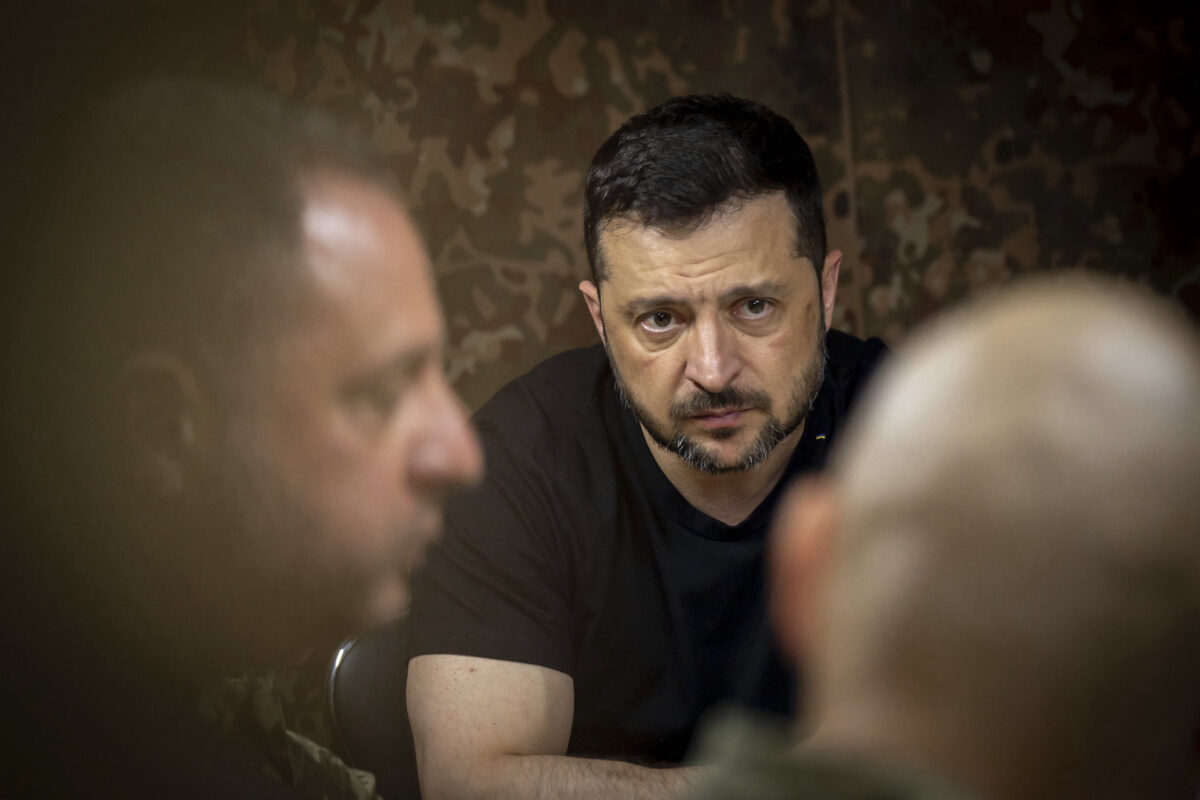
As diplomatic sources familiar with the matter point out, a comparison with the Korean Peninsula helps to understand the scope of the project, which is still at an early stage. An armed truce has been in place there for more than 70 years, backed by permanent international presence. Replicating that model would mean establishing a security corridor hundreds of kilometers long in Eastern Europe, with multinational observation posts and rules of engagement hammered out at the negotiating table. Yet the differences are significant.
There would be no permanent American bases, but rather a hybrid arrangement, with European troops on the ground and U.S. technology in support. Such a solution would at least partly ease Russian objections to yet another formal NATO expansion, and it would reduce the number of personnel required on the ground.
A turning point
The debate within the European Union remains intense, despite NATO Secretary General Mark Rutte calling Trump’s willingness to back Ukraine’s border security a “turning point.” Germany and Italy are pressing for clarity on the chain of command, the specific tasks and the time frame of the potential mission, fearing the risk of an open-ended commitment.
Others, like France, the United Kingdom and the Baltic states, are pushing for quick and decisive steps. Without a visible deterrent, they argue, any deal risks being fragile. More than one Nordic and Baltic diplomat has echoed this concern.

The U.S. approach is more pragmatic: A limited direct commitment, but one that could multiply the effectiveness of the allies thanks to technologies no European country truly possesses. As U.S. Special Envoy Steve Witkoff explained, the guarantees would not come from NATO or from individual governments, but from a multilateral agreement that combines European troops, U.S. deterrence and an advanced digital framework.
For Kyiv, such a solution might mean real protection.
This issue may come up again during the debriefing requested by European Council President Antonio Costa, who was not present in Washington, with the Coalition of the Willing. At the same time, barring surprises, there may also be an extraordinary meeting of Coreper, the permanent ambassadors, along with the cabinet of EU High Representative for Foreign Policy Kaja Kallas. Coordination will be crucial, as will unity.
For Kyiv, such a solution might mean real protection. For Washington, it would mean the ability to defend the European order without creating lasting divisions. For Europe, it would offer a chance to prove both political unity and military capacity, supported by tools that reduce risks and uncertainty.
Negotiations remain open, but one point is already evident: No peace can last long on the continent’s most fragile border without solid guarantees, without an integrated system that unites people, resources and data, and without an agreement with Moscow.
link