Golf has traditionally been seen as an activity for middle-aged businessmen to play while discussing business. However, in South Korea, there has been a shift in how people perceive the sport. More young Koreans are showing interest, its popularity is beginning to rival that of Japan or the U.S., and golf apparel brands are rethinking their fashion strategies. In your opinion, what makes Korean golf apparel brands unique, and what strengths have they developed in this evolving market?
Maybe I can start with our strategy, that has made us thrive in this market, so far. We started this business in 1998, almost 30 years ago. I would say that before us, there were not a small amount of golf apparel brands, but not a lot. Many of them were very conventional sports brands, and most Korean golfers would wear “usual” sportswear to play golf, or some kind of classic, casual wear.
In 1998, the famous womens’ golfer, Pak Se Ri won the US Women’s Open, which ignited a flame of interest in golf, among the Korean population. Back then, my father, the owner of this company, had been running several licensing companies before CREAS, and he decided to jump into the golf apparel market, communicating with Ping first, in 1997. Riding on the wave of increased interest in golf, we decided to launch Ping into the Korean market. Strategy-wise, our distinguishing factor was that we would like to position Ping as a fashion brand, not just a golf and sports brand. Before us, all of the golf brands were fairly “boring”, only offering technical and high-performance clothing, without any real special designs. It was limited to about three or four colors, so not a very wide or vivid color palette. So, we decided to make very interesting and fashionable golf-wear for the population.
And, specifically, by doing so, we were trying to capture the female market, because we deeply thought that it would be necessary to interest female customers to succeed in the fashion market, in Korea. And we did. I would say that since the start with Ping, our business went very well. That strategy made a good stepping stone for the success of CREAS.
Targeting female golfers was the first stepping stone for us. And our second one was that we wanted to convince our customers to not only wear our clothes on the fairway, but in their everyday life, as well. So, we tried to make apparel that could be worn in their daily life, without feeling strange. Design-wise, we were able to adopt a lot of casual inspired designs, that can be seen in both golf and everyday wear. With all those circumstances, we were trying to convince customers to wear our clothing in their daily lives, which ended up being very successful. That, in turn, doubled up our business on many fronts. Combining these factors were major strengths and made us exceptional from the rest of the market.
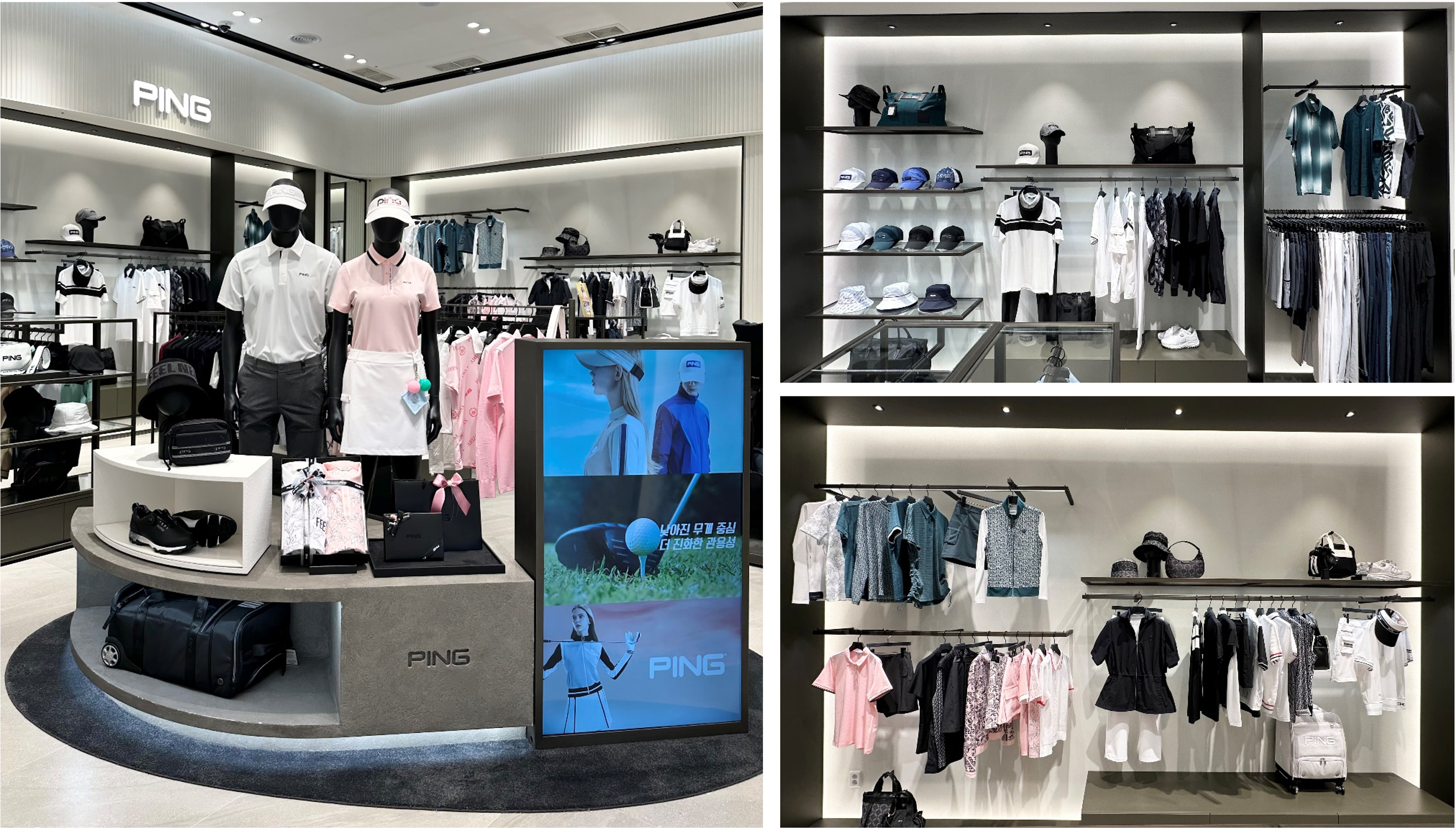
Ping Yeoksam store
When we walk down the Dogok-ro (도곡) in Gangnam today, we see many golf brands shops. Those are very strong competitors. So, with all your investments, new licensing and expansion that you’ve created with CREAS, what sets your brand apart?
The first step was to capture the female market with captivating designs. Creating designs that resonated with them was our biggest first step, as on the other side, male golfers tend to choose fabrics with good technical functions. One could say they seem to care more about performance over how their apparel looks. Whereas female golfers care more about how their apparel looks.
We tried to employ the best and biggest design team to focus on this aspect. And as of now, we have the biggest design team among our competitors in golf apparel, all over Korea. I would say one third of all our employees are on the design team. That large design team has enabled us to create the most functional and best-looking apparel, which distinguishes us from our competitors.
Secondly, a majority of the brands that we do, are found within the “premium” space, which has further helped us to create high-quality premium products.
The genesis of golf apparel started from this. Golf was perceived as a “premium” sport, which tends to have a pool of customers with a larger amount of disposable income and time. These clients tend to play golf regularly and became our core set of customers.
As the market expanded, more people naturally caught on. Still, we follow a principle that golf should be premium. We tried to position potential or current customers in this premium space, as well as communicate to them that we want to keep them there, in that premium space. This is something that differentiates us from the rest of our competitors.
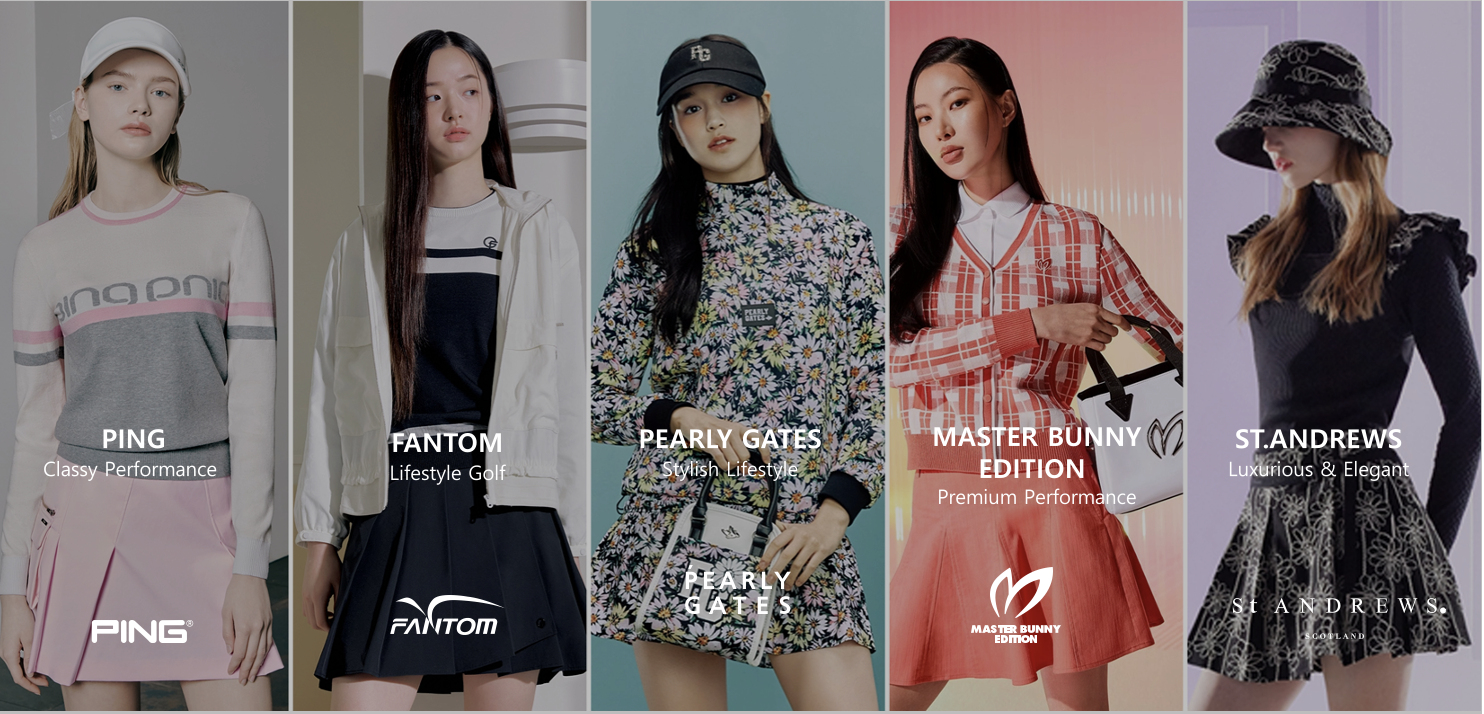
CREAS Brand Portfolio
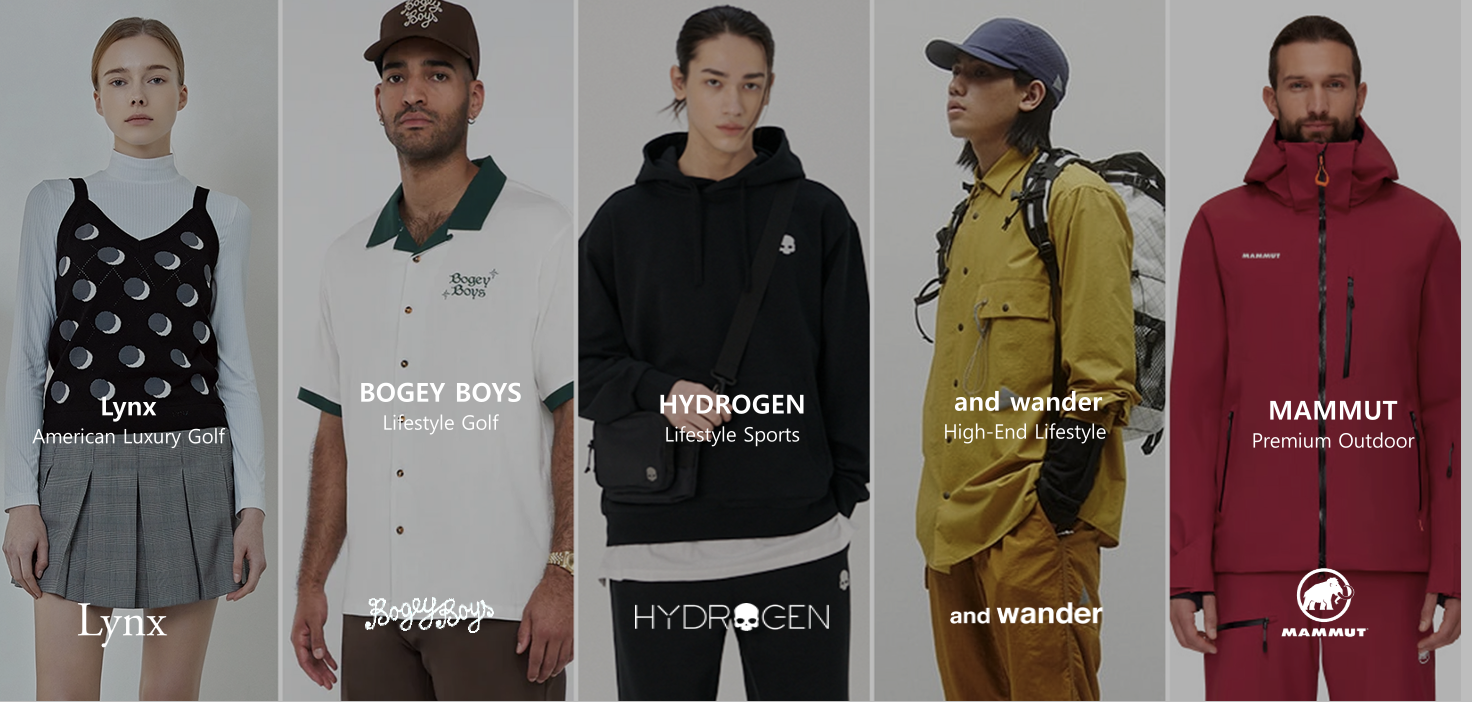
CREAS Brand Portfolio
We said earlier that the market is growing, mainly because more and more younger people have access to golf, through facilities like screen golf, here in Korea. These customers don’t necessarily buy luxury products, or tend to buy luxury products, on the lower end. Do you create some kind of transition for these customers to get educated on some of your brands, to maybe appreciate the luxurious nature of your other brands that they could gain access to, once they are older and richer?
I believe we have to be very careful with that. We’ve tried doing that before, especially during the pandemic. Over the last four or five years, many young people, especially millennials, began enjoying golf, probably for the first time in their lives, and they loved it. That has created a bloom of sorts for this market. And afterwards, more and more people could leave their homes and enjoy golf.
I would say we focused on trying to capture some of these millennials with our brands, by offering them new street-inspired styles, which they liked a lot.
One of our biggest brands, called Pearly Gates, has been the one to provide that best. During that time, we were trying to use celebrities as our main models. We had the female K-pop, Twice, as our main models and had them on television advertisements for about two years, to capture those younger customers. Hopefully, one day they will come back to this market, as this strategy did not turn out to be very effective. I believe many of our competitors experienced the same.
So far, maybe two or three brands will be the beneficiaries of this movement. Young customers have responded very well to this movement. But even they have lost a big amount of young customers in the last year. And they have since tried to replace these customers with an older demographic. I would still say we have to be very careful, as our core customers are in the older and wealthier demographic. That doesn’t necessarily mean we only have to focus only on them.
With a new brand of ours, we have been trying to capture the younger customer base, once more. In the second half of this year, we will invest a lot into our new brand Bogey Boys.
Bogey Boys is becoming more popular. So, I got in contact with the owner of Bogey Boys, a two-time Grammy Awards winner, Macklemore, a pop star. I had a meeting with him, which wasn’t very easy, as he is a very big figure.
Communicating about business wasn’t the easiest, but he is a great person. Our conversation went well, and I managed to get business rights for Bogey Boys, across the entire Asia. Now, we aim to overtake Malbon golf, and find a new, young customer base.
What philosophy, or vision, do you have for the design, quality, and sustainability with this new partnership with Bogey Boys?
Broadly, Macklemore is a musician and he insisted on having a large blanket of fashion and music. He emphasised that he wants to show an interesting image in shops and products, that should be based on musical inspiration. So, we are trying to reflect this feeling, this musical inspiration, through our products. Thus, I believe these products will be different from our conventional brands. The fit will be different, the color will be different, as well as the interior of our stores will be different. We are trying to furnish our stores in a very different way, making it look like a kind of retro vintage shop, and of course, a blend of golf. Possibly ‘Thrift Shop’ playing the whole time, as well.
Macklemore is a big fan of vintage golf, and he has a great collection of vintage golf items that we would like to possibly display in our stores, alongside some of his records and instruments that give off the vintage feeling, like vintage pianos and guitars.
You mentioned earlier that the Bogey Boys partnership will enter not only Korea, but the entire Asia. Through the example of F&F and MLB, we’ve seen Korean licensing brands penetrate the international market quite effectively. What is your strategy to transfer what you’ve experienced here to these other regions, like China, Japan and beyond?
It depends on the brands that we do. Starting with Bogey Boys, we have the full rights to expand across the entire Asia. Thus, we should find good partners in the other Asian countries, to further grow the brand.
For example, even though we do business in Asia, I always recognize a subtle difference between Korea and Japan, and a more sensitive difference between Korea and China. To target the customers in those different countries, we can’t do it by ourselves, thus we have to find a good partner that understands the market, as well as the customers and their feelings and cultural backgrounds.
Also, finding a good partner in those regions, and giving them licensing rights would be the ideal situation. Otherwise, we can do it by ourselves, by riding Korea’s wave of growing influence.
Regardless, we would have to be very careful, and create exclusive lines for those countries. Even though these customers might like Korean brands and culture, we would still have to ensure we give them the product that they would like, as their love for Korean culture does not necessarily guarantee that they will love our products and Korean clothing. Our feel is different, and our colors will be even more different, so we have to ensure our design is unique enough, while remaining practical. That means we will need a good in-house licensing design team to fit the needs of the customers in those respective markets. That would be the first part.
The second part is very important, and that is the production of our products. Even though geographically there is a close proximity between Korea, Japan and China, the temperature difference will be a major factor. Those differences require us to provide different products to suit the needs of the customers in their respective regions. Thus, we have to ensure we have a streamlined production system in place to hit the shelves at the right time in the right places.
As an example, polo shirts can be produced and be ready for distribution from anywhere between July and September, in Korea, as the weather would be suitable. However, in Beijing the weather would be slightly different and they may only need these shirts in August. That means stock remains on the shelves, and that could effectively cost money. We will have to be very cautious with our timing, to make sure the right products become available to the right customers, at the right time.
When talking about Bogey Boys, you are using the future tense a lot. What would be the timeline for any first collection? Is there a bigger picture, with a later point for this to start?
I used the future tense to remain a little conservative. I only wanted to make sure I am speaking about facts and certainties that I have right now. In reality, we will be launching a collection from Bogey Boys very soon. We already have products from them in our stores, with a flagship store opening in late July or early August, in Seoul. We are currently in talks with Japanese partners, to take Bogey Boys there, with a popup between late August and early September. It will be held in the second biggest department store in Japan, Hankyu Department Store, Umeda Main Branch.
Another brand we will be pushing in China is Hydrogen, and we have already confirmed a mass licensing agreement, with a PR ceremony probably in the second week of July, in Korea, with future ceremonies planned for Japan and China, as well.
Thanks to the success of our original brand, Ping, we can proudly say that we are the biggest licensee of Ping, in the world. Besides us, there are only one or two companies who are doing Ping business well, in different countries, with one of them being in Japan. With that said, we are aiming to open a store in Singapore, in Takashimaya mall, as well as the ION Orchard shopping mall, with one shop in a Marina Bay mall.
We are also aiming to open stores in South East Asia, with places like Bangkok, Thailand, Kuala Lumpur, Malaysia, and Djakarta, Indonesia. However, a major one for us is a flagship store in Shanghai, China. From there, we will see how we can expand our Ping business in China.
The US is viewed as the two major golfing markets in the world. How do you view these two regions, considering a possible decrease in inflation and an increase in fashion purchases?
A while ago, I asked some members from the Ping family, and what they felt about the golf upper market in the US, because I had read an article that said the Korean golf upper market had become the second biggest one in the world, with Japan now in third. They said that the US’s golf upper market will remain a golf-focused market, and not really a fashion one, for very serious golfers who don’t want to wear their playing clothes in their daily lives. On the course, they will probably keep using Nike polo shirts to play, cementing that this will probably not really change, even though they see the rise of unique and niche apparel brands, heavily inspired by California and some from Texas and near New York. These designs had collaborations with Jordan as well, and has gained some reputation, but it remains niche.
Thus, the golf upper market will remain mainly unchanged in the USA. However, in Korea, the trend seems to be the opposite, with Korean golfers wearing our clothes on the course and in grocery stores. These people appeared to be around their late 40s and early 50s. With this, we’re trying to maintain that function for our customers, by providing clothes that they can wear on the freeway and in their daily lives. We rely heavily on other casual brands to fulfill this, not traditional sports brands, to integrate that image into our sports brand.
With Ping being our genesis brand, it is very clear that our oldest and longest buying customers wear Ping in their daily lives. With that said, we have seen that those customers have been very receptive to a more casual style in their golf-wear, over the last five years, which has helped us shift our design in that direction successfully.
With the addition of new outdoor licenses, CREAS F&C’s branding now extends beyond golf. Are you steering the company in a new direction?
From the beginning, CREAS has been a long-term project. With my father, before the founding of the company, we wanted to expand our portfolio beyond golf. Since 2016 or 2017, we envisioned that the Korean golf-wear market would touch its ceiling. However, thanks to Covid, that happened a lot sooner and we saw it hitting its cap around 2023. Now we are seeing the market shrinking, and we need to shift our model to adapt, hence the idea of going beyond golf. At first, we thought the market would be going in the direction of outdoor sportswear, so we touched the market with a Pearly Gates collection, just to test the waters. Unfortunately that didn’t work out very well for us.
Before that, we conducted some business with Umbro, before Nike acquired them. That ended up not working out very well either, as Nike bought them, and demanded a lot. So, we cut ties with them, and moved on.
We spotted an overlap between older customers who enjoy outdoor sports and like wearing or using sports brands. It is visible within Korea that these customers enjoy these sports and activities as social activities, besides exercise and health. Thus, we could see that these people also care about what they wear, when doing these activities. That was what got us into the outdoor market.
So, we started thinking about what premium brands we could work with. Our reference was Arc’Teryx, which started becoming more and more popular during Covid. We could see that people were buying these expensive, premium products, which gave us the spark to venture into this market. People had started telling us that Mammut would be the way to go, as it is in the same price bracket, and it is an older brand than Arc’Teryx. It also carries the reputation of being worn by athletes and extreme sports celebrities. Keeping all that in mind, we took the leap, and decided to push and become the rivals of Arc’Teryx.
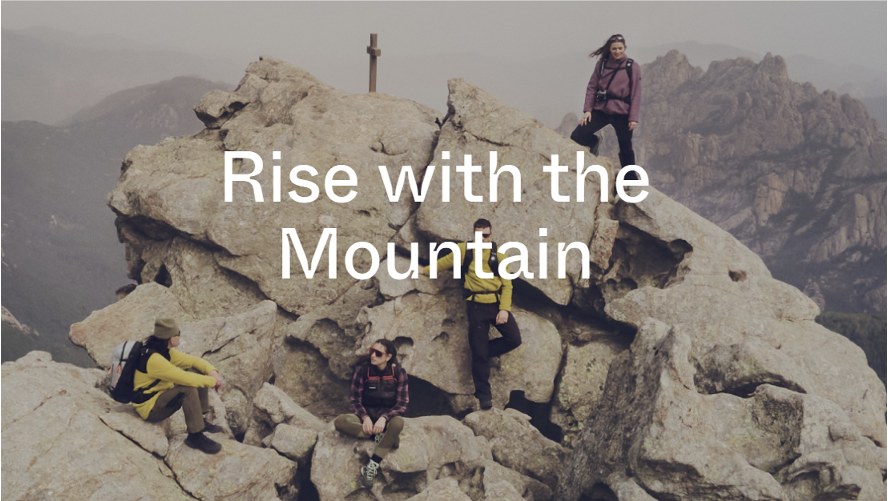
Mammut collection
Besides Mammut, we also looked at And Wander, which seemed to be the most fashionable outdoor wear on the market. Now with our ability to produce high quality, premium sportswear and outdoor wear, it only seemed natural to get And Wander on board. This way, we could show our customers that this is the most fashionable outdoor wear you can find. A good story behind it is that many companies tried to get them involved in Korea, but they did not really want to take the plunge. However, I somehow managed to convince them to get on board and now we are not just distributors, but also licensees of And Wander, here in Korea. The same is true for Mammut, with us being the first to get them involved.
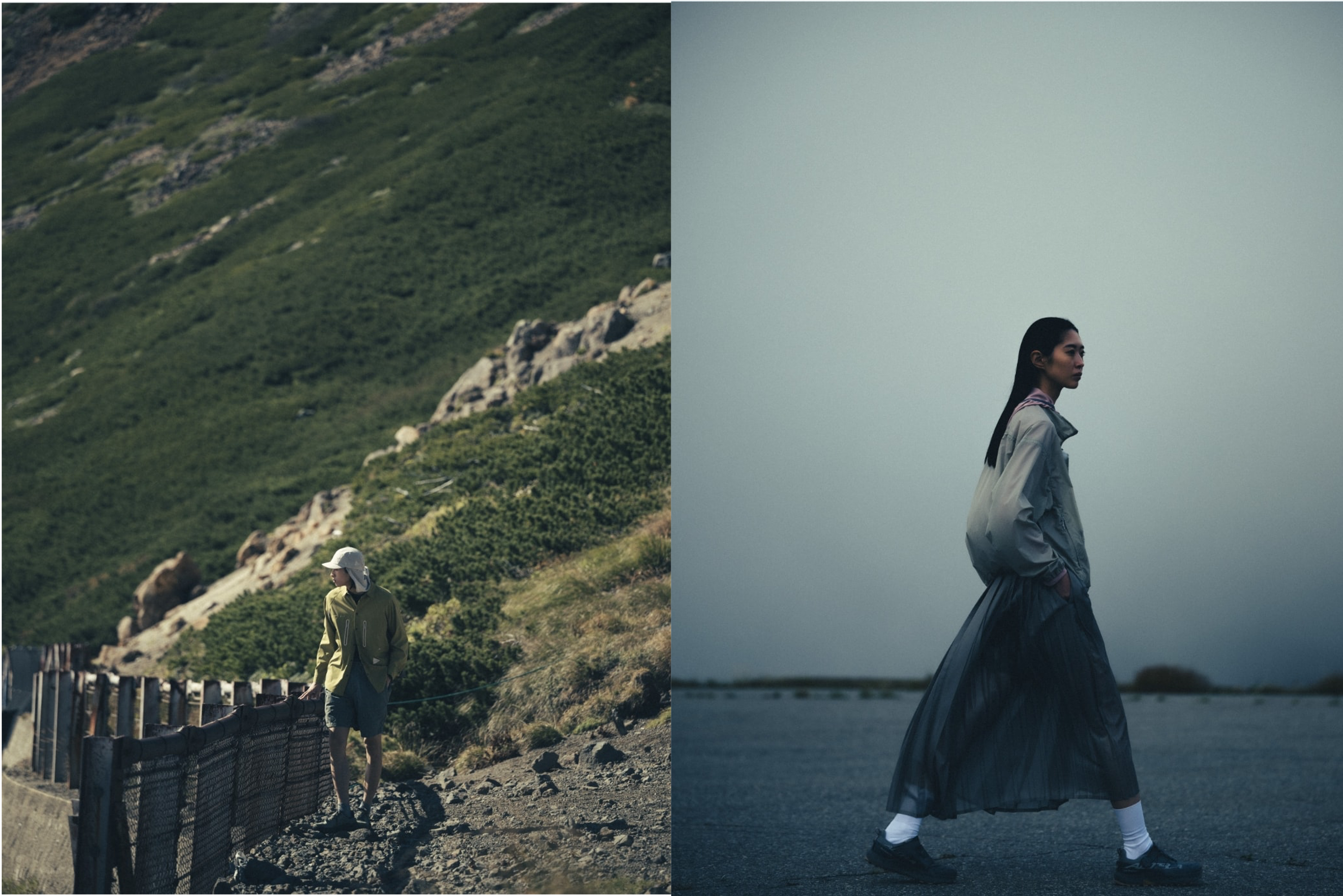
And Wander collection
Mammut and And Wander are positioned at the top of our brand portfolio, in the premium range. And to target the customers on the broader level, we are proud to have Hydrogen.
With Italian inspiration, it was perceived as a premium sports brand all over Europe, and the origin of the brand was near the mountains in Padova. Thus we took that image and created an idea for our customers that we can offer them something premium, but at an affordable price.
We really established a strong upper market portfolio, thanks to those three brands.
Today, you are leading the expansion of Bucketstore’s online platform. Are there plans to expand further into new countries and languages, such as Mandarin, Japanese, or English?
Yes, there is a full intention to expand to a way more international market. These international versions will be targeting mainly China, as well as Japan, and Singapore. Hopefully by next year we’ll be able to show our hand a little more, and see what the people think.
With all your brands, which one do you like the most as a businessman and secondly, as a consumer?
Personally, I think St. Andrews is like my child. We started with it in 2018, and I was always deeply involved in the development of the brand, including the concept of the brand, and the segmentation of the brands. On top of that, I was also doing a lot of work to identify and work with the market that we were targeting. So, emotionally, I am probably the most attached to that brand.
On top of that, it is our most expensive line of products, and it is showing steady growth. Since 2024, many golf brands in Korea have been suffering, due to the shrinkage of the market. Many brands will probably reflect a loss in the double digits, percentage wise. Among them, St. Andrews is one of very few brands that are showing growth, so it makes it something to be a little more proud of.
Practically, as a businessperson, I would say Hydrogen is my favorite. There is a lot of ambition to grow and expand it, as it is now our own brand. We have been making a lot of monetary investments to grow and change it more, as we have already started it up in Japan, and we are aiming to start up in China as well, closer to the end of this year, or at the beginning of next year. I really would like to grow this brand as big as possible in Korea, China, and Japan.
A last personal question. You are well positioned to be the future of this company and make it a great success. Where do you want to see the company go?
Right now, we are facing a transition period, with many parts of the business that are changing. With this, we are luckily seeing good momentum within the outdoor sports market. One serious challenge that we’re facing within this transition is the change from offline to online. Bucketstore wise, the revenue growth is exceptional, which is great to see. But at some point, we will have to think about how we can manage our offline stores, as some of them are definitely underperforming. Not entirely due to the economic situation, but more so how consumer behavior is changing. By observing the trends, we thought that it would be a good idea to change our mindset from an offline company and heavily focus on the online aspect, as that is where customers seem to be going. That is one of our biggest concerns, right now. If we meet again in say, 10 years from now, you will probably notice that most of our revenue would be coming from online stores.
For more details, explore their website at
link